-
How Much Does Emergency Roof Tarping Cost in Cheyenne, WY?
Emergency roof tarping in Cheyenne, WY costs anywhere from $315 to $1,260 on average to tarp one damaged section of a pitched shingle roof. The price depends on how much area needs covering, how steep and high the roof is, whether the decking is broken through, and whether the call comes at night or on a weekend.
-
Do You Tarp Roofs on Homes and Commercial Buildings?
Yes, we tarp houses, townhomes, mobile homes, apartment buildings, stores, offices, and warehouses. Tell us the property type and roughly how big the damaged area is.
-
Do You Service My Area?
Yes, in most cases. Send us the property address and we'll confirm we cover it.
-
Can You Tarp a Roof at Night or on Weekends?
Yes, most emergency tarp crews take calls 24/7, including weekends and holidays.
-
How Soon Can You Get Here?
We're usually there within a few hours of your call. After a big storm, when many roofs in the area need tarps at once, it can take a day or more, so call us early.
-
How Soon Should a Damaged Roof Be Tarped?
As soon as it's safe, ideally before the next rain. Mold can start within 24 to 48 hours of water getting in, so we put open roofs first.
-
Can You Tarp a Roof in the Rain?
Yes, in most cases, as long as it's safe to be on the roof. Nobody goes up in lightning or strong wind, since a big tarp catches wind like a sail, so we protect the inside first and tarp as soon as it eases.
-
Does Homeowners Insurance Cover Emergency Roof Tarping?
Yes, in most cases when the damage is sudden, like wind, hail, or a fallen tree. Leaks from an old, worn roof usually aren't covered. Your insurer confirms what your policy pays, and we can send the photos and invoice it asks for.
-
Should I Wait for the Adjuster Before Getting a Tarp?
No, most policies expect you to cover a damaged roof right away, and insurers usually deny water damage that happens because the roof was left open. Photograph the roof and every wet spot inside, then call us to tarp it.
-
How Long Can a Tarp Stay on a Roof?
Most roof tarps hold up for 30 to 90 days, depending on the tarp and the weather. Book the permanent repair as soon as you can.
-
Is a Roof Tarp Completely Waterproof?
No, a tarp sheds water but it isn't sealed like a finished roof. Leaks usually start at the edges, at fasteners, or where water pools, so if it still drips after we tarp, tell us where.
-
Can I Tarp the Roof Myself?
Yes, but it's a two-person job for a dry, calm day. You need a harness, a spotter on the ladder, and battens with screws. We never send anyone up alone, because a gust can catch a tarp and pull a person off the roof.
-
What Information Do You Need When I Call?
We need the address, what caused the damage, whether water is coming in, and how many stories the house is. Phone photos of the roof from the ground help us bring the right size tarp.
-
Do I Need to Be Home While You Tarp the Roof?
No, not as long as you've approved the work and we can reach the roof.
-
Will You Need to Get Into My Attic?
Yes, if we can. A ceiling stain can be several feet from where the water actually gets in, and the attic shows us the wet decking and the real entry point.
-
Can I Get My Roof Tarped if I'm Renting?
Yes, but your landlord or property manager has to approve it first.
-
Do I Need a Permit or HOA Approval for a Roof Tarp?
No, in most cases a temporary tarp put on to stop a leak doesn't need a permit, but your local building department decides. Permits usually apply to the permanent repair. If you have an HOA, let it know the tarp is temporary and we can tell you what to send them.
-
Can I Get a Price Before You Start?
Yes, we confirm the price before any work begins. If we find more damage once we're on the roof, like a cracked rafter, we talk to you before going further.
-
Do You Charge More for Nights, Weekends, or Holidays?
Yes, in many cases. An after-hours charge of $100 to $400 is common, though some companies charge one flat rate at any hour.
-
Can You Give Me Photos and an Invoice for My Insurance Claim?
Yes, in most cases you get before and after photos of the roof and an itemized invoice for your insurance company. Ask your insurer if it needs anything else.
-
Should I Take the Tarp Off Before the Adjuster Comes?
No, leave it on and tell the adjuster it's there. Most adjusters work from the attic and your before photos, or we can lift a section for them and re-secure it the same day.
-
How Long Does It Take to Tarp a Roof?
Most single-area tarps take one to four hours. A large section, a steep roof, or a hole that needs plywood first can take most of a day.
-
Can You Tarp a Hole in My Roof?
Yes, we usually screw 1/2-inch plywood over the hole first, then tarp over it. Without the plywood, the tarp sags into the hole and collects water.
-
Can You Tarp a Roof After a Tree Falls on It?
Yes, once the tree or limb is off the roof. We check the rafters or trusses under the hole, cover it with plywood, then tarp. Let us know if the tree is still on the house.
-
How Do You Hold the Tarp Down?
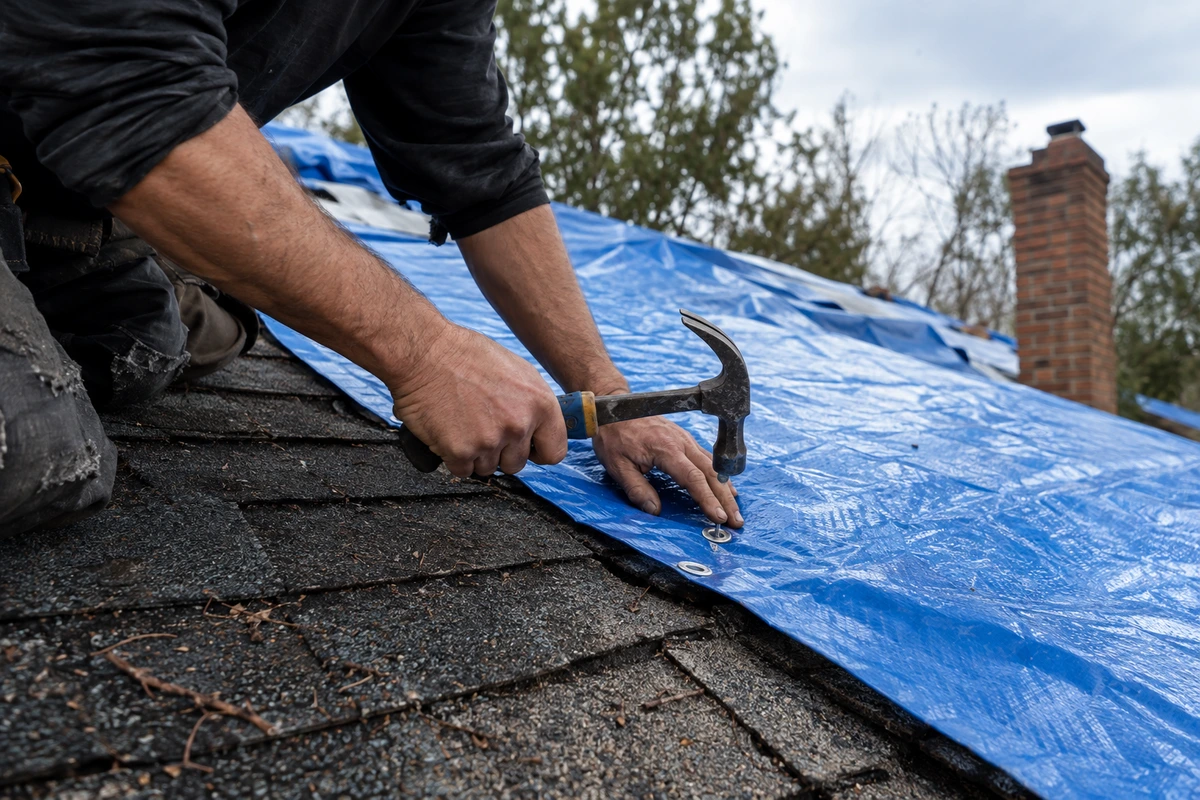
We wrap the tarp edges around 2x4 boards and screw the boards into the roof decking. The tarp runs about 4 feet over the ridge so water can't get under the top edge.
-
Will Tarping Damage My Roof?
Yes, a little. We screw the battens into the decking, which leaves a few small holes, mostly in the section being repaired anyway. The roofer seals or replaces those spots during the permanent repair.
-
Can I Get a Free Blue Roof Tarp From FEMA?
No, unless there's a federal disaster declaration for your area. Even then, Operation Blue Roof covers only primary homes and lived-in rentals, not businesses or mobile homes.
-
Can You Tarp the Whole Roof?
Yes, a large or badly damaged roof gets several overlapping tarps battened down together. It's priced by the area covered, so send us photos of the whole roof.
-
Can You Tarp a Steep or Two-Story Roof?
Yes, we use roof jacks, harnesses, and fall protection on steep and two-story roofs. Pitch and height add time and cost, so mention them when you call.
-
Can You Tarp a Flat Roof?
Yes, but a tarp can hold standing water on a flat roof, and we weigh it down instead of screwing through the membrane. A temporary membrane patch often works better there, sometimes along with a tarp.
-
Can You Tarp a Tile Roof?
Yes, but clay and concrete tiles crack underfoot. We step carefully and often fasten the tarp at the eaves instead of through the tiles, so tell us it's tile when you call.
-
Can You Tarp a Metal Roof?
Yes, in most cases. We avoid screwing through the panels where we can and hold the tarp with clamps or weights instead. Say whether it's exposed-screw or standing seam.
-
Can You Tarp a Mobile Home Roof?
Yes, we tarp mobile and manufactured home roofs. These roofs are thin, so we're careful where fasteners go and don't nail through the metal at random.
-
Can You Tarp Around a Chimney, Skylight, or Vent?
Yes, those are some of the most common leak spots. We fit the tarp around them so water can't run in behind the chimney or under the skylight flashing.
-
Can You Tarp Missing Shingles After a Wind Storm?
Yes, blown-off or lifted shingles leave the felt and decking open to the next rain. Let us know roughly how big the bare patch looks from the ground.
-
Can You Tarp a Roof After Hail Damage?
Yes, if hail has cracked or broken shingles enough to leak. Those shingles usually get replaced, and the tarp keeps water out until the claim is settled.
-
Can You Tarp a Roof After a Fire?
Yes, once fire officials let us onto the property. We cover burned-through areas and the ventilation holes firefighters cut, and broken windows and doors are often boarded up at the same visit.
-
Can You Tarp My Roof Before a Hurricane Hits?
Yes, we can tarp a weak or already damaged area ahead of a storm. Book early, because crews fill up fast once a hurricane is forecast.
-
What Should I Do Inside While I Wait for the Tarp?
Put buckets under drips, move furniture and electronics away from the leak, and pull up wet rugs. Keep everyone out from under a ceiling that's sagging or bulging.
-
Should I Go on the Roof to Check the Damage Myself?
No, stay off a damaged roof. Loose shingles, wet surfaces, and soft decking cause falls, so look from the ground or the attic and send us photos.
-
Can I Stay in My House With a Tarp on the Roof?
Yes, in most cases, once water has stopped coming in and no ceiling is sagging. After a fire or a tree strike, wait until officials say the building is safe.
-
What Kind of Tarp Do You Use?
We use heavy-duty, UV-treated polyethylene tarps, typically 12 to 20 mil thick. Lightweight hardware store tarps are often only 5 or 6 mil and tear more easily in wind.
-
Why Not Just Weigh the Tarp Down With Sandbags?
Sandbags can hold a tarp on a flat roof, but on a sloped roof they shift in strong gusts and let wind get under it. That's why we screw battens into the roof on pitched roofs.
-
Should I Check the Tarp After Each Storm?
Yes, look at it from the ground after high winds or heavy rain. If an edge is flapping or water is coming in again, call us to re-secure it.
-
Who Takes the Tarp Off When the Roof Is Fixed?
The roofer doing the permanent repair usually removes it as part of the job. If you'd rather we take it off, ask us for a price when we tarp.
 Emergency Roof Tarping Kings
Emergency Roof Tarping Services in Cheyenne, WY
Emergency Roof Tarping Quotes
We provide emergency roof tarping, storm damage tarp installation, and temporary roof covering services in Cheyenne, WY for both residential and commercial properties. Contact us now for a free estimate.